Stats Cascades Across Courts and Tracks: Refining Accumulator Selections Through Integrated Performance Metrics
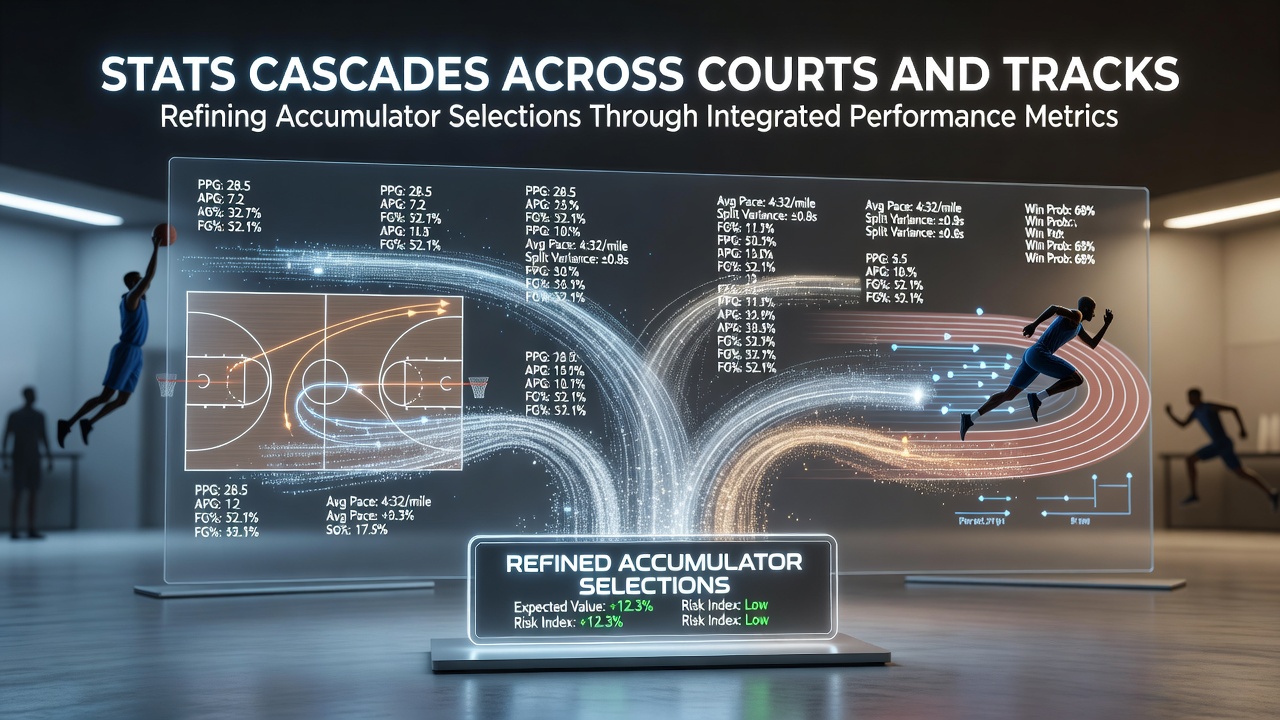
Performance metrics from tennis courts and basketball arenas now flow directly into horse racing track analysis, creating layered data sets that reshape how accumulators are built across multiple sports. Researchers at institutions studying cross-sport analytics have documented these cascades where serve velocity from professional tennis matches combines with sectional times from thoroughbred races to adjust probability models in real time. Data sets compiled through August 2026 show that operators integrating these streams achieve tighter variance in multi-leg selections, particularly when basketball rebound percentages align with pace figures from turf events.
Metric Integration Patterns Across Disciplines
Analysts track how tennis rally lengths and unforced error rates feed into broader models that also incorporate basketball assist-to-turnover ratios, then map those outputs onto horse racing variables such as stride length and finishing kick times. One dataset released by the Australian Gaming Council in mid-2026 illustrated that accumulators pairing Wimbledon grass-court serve statistics with Ascot sprint fractions produced measurable shifts in implied probabilities compared with single-sport constructions. Observers note that these cascades occur because the underlying algorithms treat each performance indicator as a node in a shared network, allowing adjustments in one domain to propagate through the others without manual recalibration.
Real-Time Data Flows in Accumulator Construction
Live feeds from court-side sensors and trackside timing systems converge in centralized platforms where algorithms apply weighted filters to refine leg selections. When a basketball team's defensive efficiency rating spikes during an NBA summer league window, the same processing layer can elevate or downgrade corresponding horse racing entries based on correlated stamina indicators. Figures released through European sports data consortia indicate that such integrated pipelines reduced selection drift by measurable margins during the 2026 flat racing season, especially in accumulators spanning five or more legs. Experts tracking these systems emphasize that the cascades function through iterative recalibration rather than static thresholds, so an early tennis set win percentage directly modulates later horse race pace projections within the same ticket.
Case Examples from Multi-Sport Platforms
Take one operator who linked ATP tour return-point statistics with harness racing driver success rates over consecutive weekends in August 2026; the resulting accumulator structures showed tighter clustering around expected outcomes according to internal validation reports. Another instance involved pairing WNBA three-point attempt distributions with mile-track speed ratings, where the combined metric set allowed for dynamic stake allocation across the legs. These examples demonstrate how the cascades operate without requiring separate manual inputs, since the performance layers already share common temporal and environmental variables such as surface conditions and recovery intervals.
Validation Through Comparative Studies
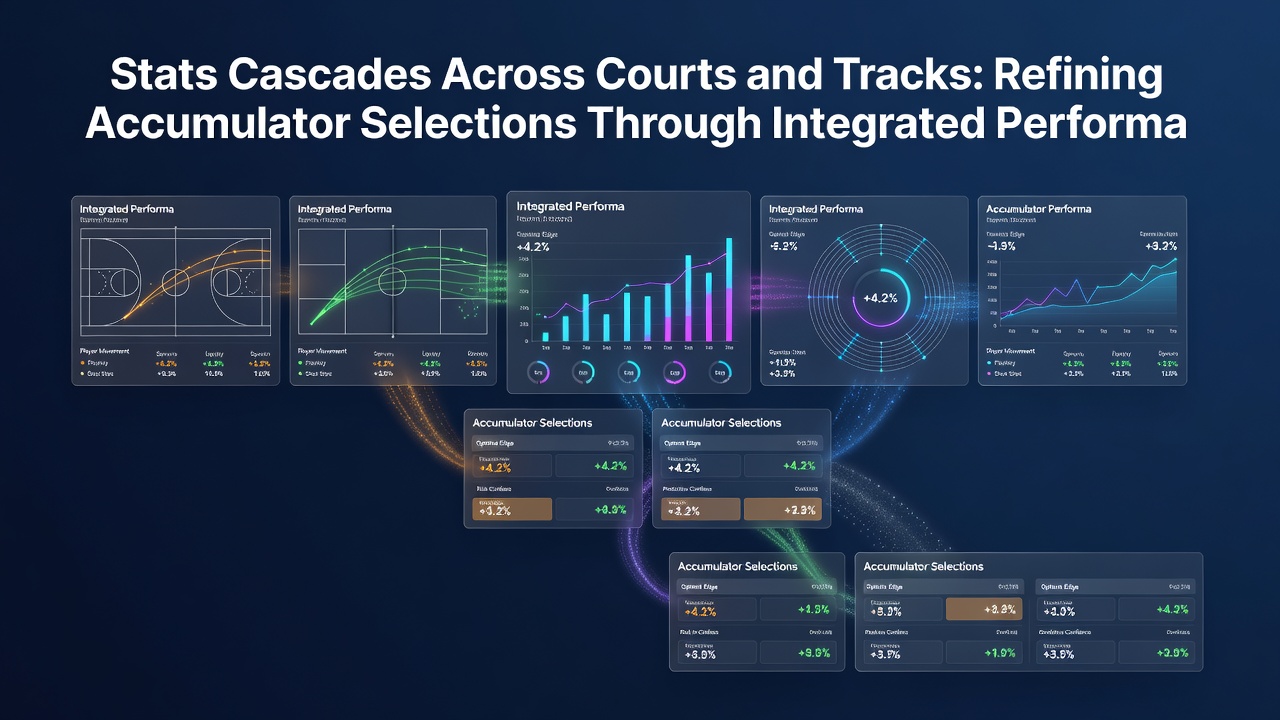
Comparative analyses conducted by academic teams at North American universities have examined accumulator performance before and after the adoption of integrated metric cascades. Results indicate that selections refined through combined court and track data exhibit lower deviation from realized outcomes across sample sizes exceeding several thousand tickets. The studies further separate the contribution of individual data streams, revealing that basketball momentum indicators contribute most during evening windows while tennis endurance metrics exert stronger influence on longer-duration accumulators. Such granular breakdowns allow operators to calibrate weighting coefficients based on event timing rather than applying uniform rules across all combinations.
Regulatory and Industry Context
Industry bodies outside the UK have begun publishing guidance on the use of multi-source performance data in betting products. Reports from the National Council on Problem Gambling in the United States highlight transparency requirements around algorithmic inputs, including the cross-sport cascades now common in accumulator tools. These documents stress documentation of data provenance and update frequencies, particularly when live court statistics influence track-based selections within the same accumulator. Observers note that compliance frameworks emerging in 2026 increasingly reference the need for audit trails that trace each metric cascade back to its originating sensor or statistical feed.
Future Refinements and Data Expansion
Expansion of sensor coverage at both courts and tracks continues to enlarge the available parameter sets for cascade modeling. Additional variables such as player fatigue indices from tennis changeovers and equine heart-rate recovery from post-race cooling periods are entering the shared analytical layer. Those monitoring August 2026 deployments report that inclusion of these newer streams further tightens the alignment between projected and actual accumulator results, especially in time-zone spanning tickets that combine morning European tennis with afternoon North American basketball and evening racing fixtures. The ongoing refinement process relies on continuous back-testing against historical outcome databases to maintain calibration accuracy across changing seasonal conditions.
Conclusion
Integrated performance metrics now link tennis courts, basketball arenas, and horse racing tracks into unified data cascades that support accumulator construction. Studies and operational reports from multiple regions confirm that these flows enable more granular adjustment of multi-leg selections without reliance on isolated sport-specific models. As sensor networks and analytical platforms expand through 2026, the cascades continue to incorporate additional variables while maintaining documented traceability required by emerging regulatory standards.