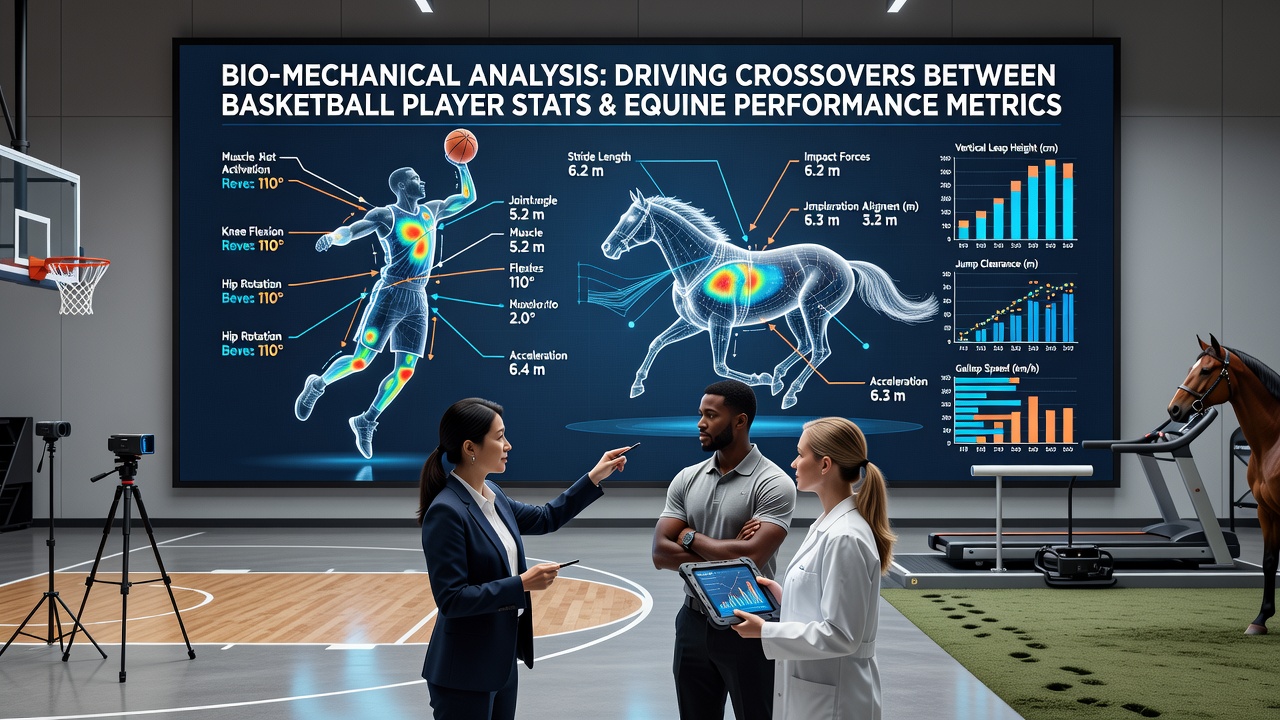
Biomechanical Data Analysis Reveals Performance Parallels Between Basketball Athletes and Equine Competitors
Biomechanical analysis has expanded beyond single-sport boundaries in recent years, and researchers now track movement patterns across human and equine athletes with increasing precision. Data from force plates, motion capture systems, and wearable sensors create comparable metrics that connect basketball player statistics to equine performance indicators. Studies conducted through 2026 show how stride length in horses aligns with vertical leap measurements in basketball players when normalized for body mass and power output.
Core Measurement Tools Shared Across Disciplines
Force plate technology records ground reaction forces during basketball takeoffs and equine hoof strikes, while high-speed cameras capture joint angles in both contexts. Observers note that peak force values from a basketball player executing a dunk often follow similar curves to those generated by a racehorse during a gallop transition. Researchers at institutions focused on sports science have compiled databases that allow direct comparison of these force-time histories across species.
Accelerometers placed on athletes and horses measure acceleration vectors during explosive movements, and algorithms convert raw data into standardized scores for power and efficiency. Those who've studied both fields point out that asymmetry detection in basketball knee flexion mirrors lameness identification protocols used in equine veterinary assessments. August 2026 updates to sensor calibration standards have improved cross-species data compatibility by refining sampling rates to capture micro-variations in both human and horse locomotion.
Shared Performance Metrics and Statistical Models
Basketball analytics track metrics such as jump height, horizontal speed during cuts, and recovery time between efforts, while equine performance records include stride frequency, suspension phase duration, and energy return from tendons. Statistical models developed in one domain transfer effectively to the other when researchers adjust for differences in limb structure and mass distribution. Evidence from comparative studies indicates that basketball players with high reactive strength indices often display movement efficiencies that parallel those seen in elite dressage horses during collected gaits.
Machine learning applications now process combined datasets, identifying patterns where basketball court acceleration correlates with equine track performance under similar fatigue conditions. What's interesting is how rotational torque measurements around the hip joint in players map onto stifle joint loading in horses during turns. Data indicates that training programs incorporating these shared variables produce measurable improvements in both groups, though protocols remain sport-specific.
Applications in Injury Prevention and Rehabilitation
Clinicians apply biomechanical thresholds derived from basketball player monitoring to equine rehabilitation programs, particularly for soft tissue recovery timelines. For instance, load management strategies that limit repetitive high-impact jumps in athletes translate into controlled exercise regimens for horses returning from tendon injuries. Research teams have documented cases where early detection of compensatory movement patterns prevented recurring issues in both populations.
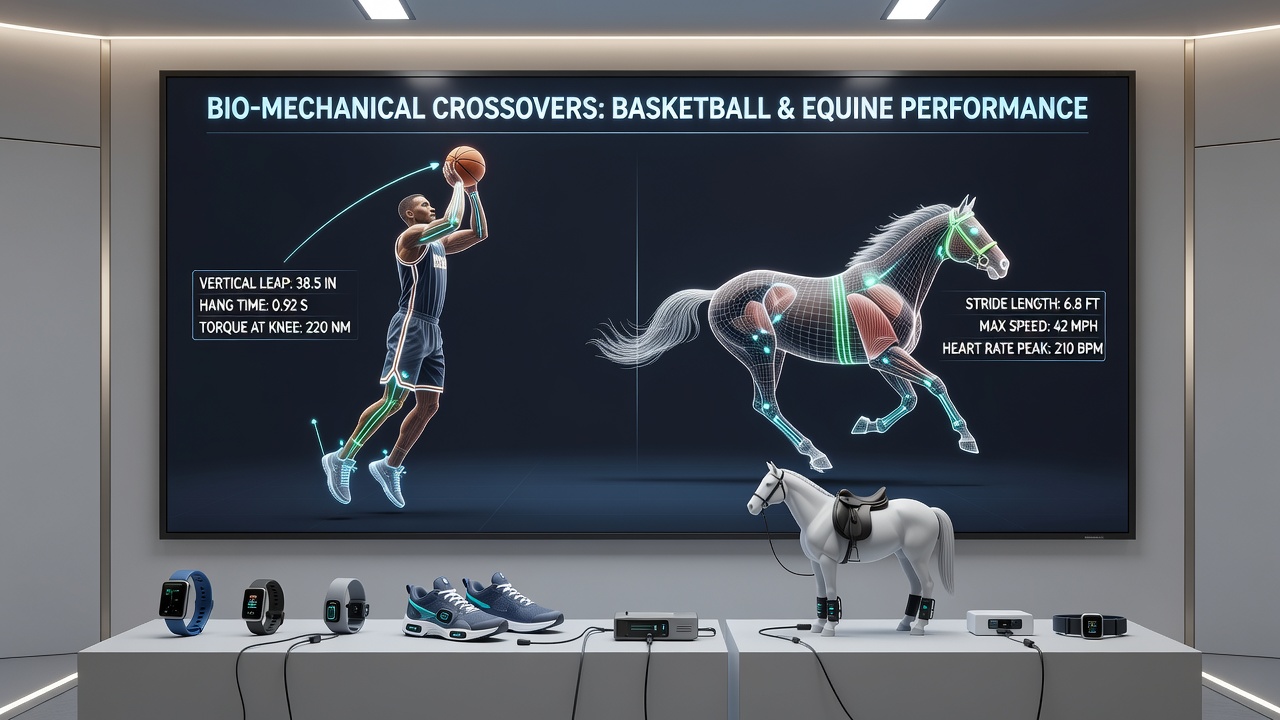
Rehabilitation centers increasingly use the same motion analysis software packages for both basketball players and competition horses, allowing therapists to visualize symmetry scores and range-of-motion changes over time. According to reports from the American College of Sports Medicine, these unified platforms reduce assessment variability and support evidence-based return-to-play or return-to-competition decisions. Observers note that kinematic data collected during August 2026 competitions highlighted how fatigue-induced changes in basketball shooting mechanics resemble gait alterations in horses during extended events.
Research Collaborations and Data Integration
Universities with strong programs in both kinesiology and veterinary science have established joint laboratories that pool resources for multi-species biomechanical projects. One study revealed that neural network models trained on basketball player datasets accurately predicted equine fatigue markers when input variables were scaled appropriately. Those involved in these projects emphasize the value of standardized ontologies that define equivalent movement phases across human and equine athletes.
Industry organizations such as the International Society of Biomechanics facilitate knowledge exchange through conferences where findings from basketball performance research inform equine training technology development. Figures from academic repositories show rising publication rates on cross-domain applications, with particular growth in papers addressing rotational stability and impact absorption strategies. External resources like those hosted by the National Institutes of Health provide open-access datasets that support further integration of these metrics.
Future Directions in Cross-Species Analysis
Emerging sensor technologies promise finer resolution in tracking both basketball player joint stresses and equine limb loading during competition. Teams continue to refine algorithms that normalize data across body sizes and movement speeds, creating unified performance benchmarks. Evidence suggests that continued collaboration between sports scientists and equine specialists will expand the range of transferable insights, particularly in areas of neuromuscular coordination and energy efficiency.
Conclusion
Biomechanical analysis continues to bridge basketball player statistics with equine performance metrics through shared measurement techniques and modeling approaches. Research demonstrates consistent parallels in force production, asymmetry detection, and fatigue responses that benefit training and recovery protocols in both domains. As data integration advances, these crossovers provide objective foundations for performance optimization across species boundaries.